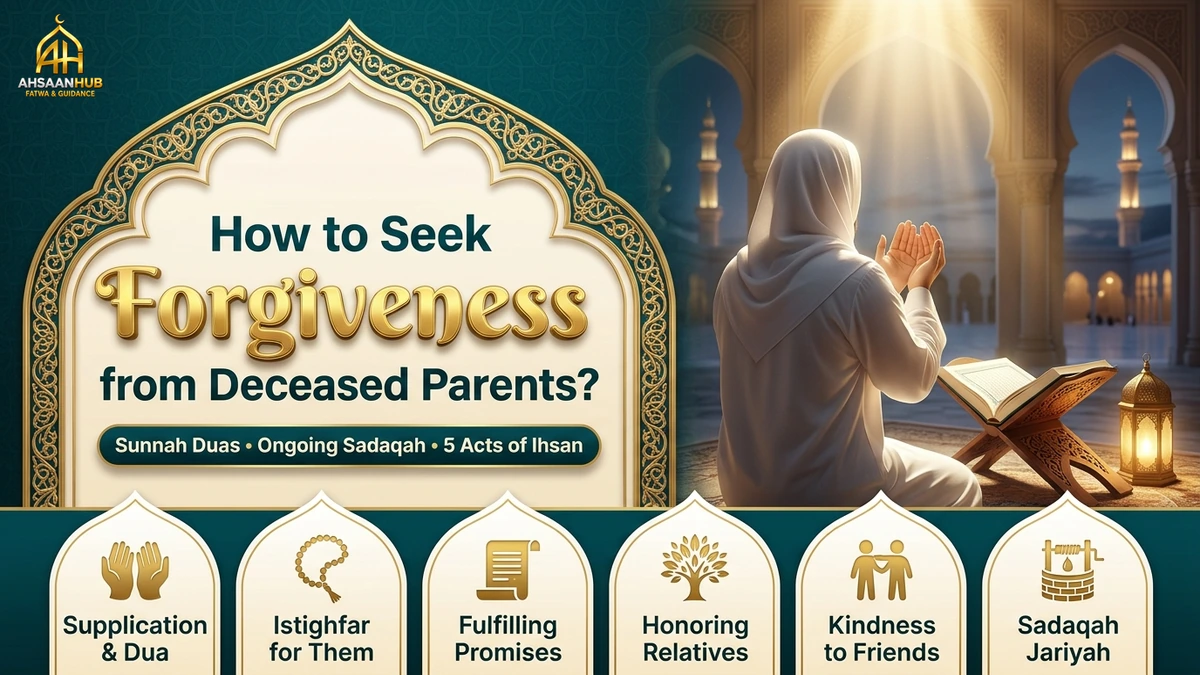
If a person had difficulties with his parents during their lifetime, or caused them hurt or displeasure, and they passed away before he could seek their forgiveness directly, there are Sunnah-based acts through which he can still honour his parents, make amends, and receive their forgiveness even after their death.
How to Honor Your Parents After Their Death?
Allah (SWT) commands in the Quran:
“وَبِالْوَالِدَيْنِ إِحْسَانًا”
Wa bil-walidayni ihsana.
And be good to parents.
Al-Isra 17:23
A man came to the Prophet (PBUH) and asked: My parents have passed away; is it still possible for me to do good to them after they have left this world?
The Messenger of Allah (PBUH) answered with five fundamental acts through which kindness and goodness may still be shown to one’s parents after their death:
- General Supplication: The Prophet (PBUH) said: pray for your parents. This encompasses every form of general supplication such as the Quranic Sunnah dua:
“رَّبِّ ارْحَمْهُمَا كَمَا رَبَّيَانِي صَغِيرًا”
Rabbi-rhamhuma kama rabbayani saghira.
My Lord, have mercy upon them as they raised me when I was young.
Al-Isra 17:24
or asking Allah (SWT) for the elevation of their ranks and for whatever good and goodness one can ask on their behalf.
- Seeking Forgiveness for Them: Beyond general supplication, the Prophet (PBUH) specifically emphasised: pray for their forgiveness (Istighfar) and seek Allah’s pardon on their behalf.
- Fulfilling Their Commitments: The third act the Prophet (PBUH) mentioned is: if your parents had made any promises, pledges, or commitments to anyone in their lifetime, fulfil those commitments on their behalf after their passing; this too is counted as ihsan (excellence and kindness) toward them.
- Maintaining Ties with Their Relatives: The fourth act is to treat the relatives of your parents with kindness and good conduct. Honouring the relatives of one’s parents is, in reality, honouring the parents themselves.
- Treating Their Friends with Goodness: The fifth and final act mentioned by the Prophet (PBUH) is to treat the friends and companions of your parents with respect and good behaviour, for this too falls within the category of ihsan toward parents.
Sunan Abi Dawud: 5142, Sunan Ibn Majah: 3664 (Hasan), Sahih Muslim: 2552c
Best Sadaqah Jariyah for Deceased Parents
The five acts above are narrated together in one blessed Hadith, while other narrations also mention giving Sadaqah on behalf of deceased parents, donating in whatever way one is able as an ongoing source of reward (Sadaqah Jariyah) that continues to benefit them.
Sahih Muslim: 1631, Sahih al-Bukhari: 2756
This may take different forms:
- Purchasing and donating copies of the Quran to a mosque, so that the parents receive reward as long as people continue to recite from them.
- Donating prayer mats or carpets to mosques, or contributing to the construction and maintenance of a mosque.
- Installing a water tap, a drinking water facility, or any ongoing welfare project whose benefit continues to reach people over time.
A Companion came to the Prophet (PBUH) and asked: Which Sadaqah is the most virtuous? The Prophet (PBUH) replied that the Sadaqah of water is the best Sadaqah.
Sunan Abi Dawud: 1681 (Hasan by Al-Albani), Sunan an-Nasa’i: 3664
Therefore, arranging a water facility or installing a water tap on behalf of one’s parents is among the finest Sadaqah Jariyah, one that delivers direct and continuous benefit to them.
How Do Children’s Duas Benefit Deceased Parents?
If any of these acts or all of them are performed, the forgiveness and goodwill of the parents will be attained (in sha Allah)
It is not necessary that one seek their forgiveness face to face as one would have in their lifetime.
It is narrated in a Hadith that the condition of deceased parents in Barzakh (the intermediate realm between death and resurrection) can suddenly improve:
- If they are in a state of comfort and goodness, their ranks are elevated further.
- And if, God forbid, they are in some state of difficulty or punishment, that suffering is reduced or removed entirely.
In both cases, when they witness this sudden improvement in their situation, they ask the angels in astonishment: What has caused this sudden change and betterment in our condition?
The angels inform them: your children have supplicated for you in the world.
Sunan Ibn Majah: 3660 (Hasan by Darussalam & al-Albani), Musnad Ahmad: 10610
This means the supplication of children reaches parents directly and benefits them.
Parents await the prayers of their children.
The more a person prays for them and performs righteous acts on their behalf, the more benefit will reach them, and this will prove far more beneficial than any verbal apology that might have been made in their presence during their lifetime.
How Should One Repent to Allah for Hurting Parents in Their Lifetime?
Alongside all of these acts and prayers offered for one’s parents, for the attainment of personal peace and contentment of the heart, a person should sincerely and continuously seek Allah’s forgiveness for any shortcoming or wrongdoing and make the following supplication before his Lord:
“O Allah, whatever pain I caused my parents, set that right through Your grace.
And if I fell short of any right owed to my father or mother, O Allah, fulfil that right from Your infinite favour and generosity.”
When a person continues to turn to Allah (SWT) in sincere repentance and Istighfar for his own faults, while simultaneously offering du’a for the forgiveness of his parents and continuing acts of ihsan and charity on their behalf, all of his affairs will be rectified, in sha Allah.
Surah Az-Zumar 39:53, Sahih al-Bukhari: 6534
Summary of Key Authentic References
| Action / Category | Description & Benefit | Authentic Citation |
|---|---|---|
| Kindness to Parents | Quranic obligation to show continuous kindness and respect to parents. | Surah Al-Isra 17:23 |
| Supplication (Dua) | Quranic prayer asking Allah for mercy upon parents as they raised us in childhood. | Surah Al-Isra 17:24 |
| Five Acts After Death | Dua, Istighfar, fulfilling commitments, maintaining family ties, and honoring their friends. | Sunan Abi Dawud: 5142, Sunan Ibn Majah: 3664, Sahih Muslim: 2552c |
| Sadaqah Jariyah | Three deeds that continue after death: ongoing charity, beneficial knowledge, and a righteous child who prays. | Sahih Muslim: 1631 |
| Charity on Their Behalf | Reward of charity given by children directly reaches deceased parents. | Sahih al-Bukhari: 2756 |
| Best Sadaqah (Water) | Providing drinking water or water wells on behalf of deceased parents. | Sunan Abi Dawud: 1681, Sunan an-Nasa’i: 3664 |
| Elevation of Ranks | Parents’ status being elevated in Paradise due to their child’s Istighfar. | Sunan Ibn Majah: 3660 |
| Sincere Repentance | Turning to Allah in sincere repentance and settling all past obligations. | Surah Az-Zumar 39:53, Sahih al-Bukhari: 6534 |