What Should Be Recited After Surah al-Fatihah?
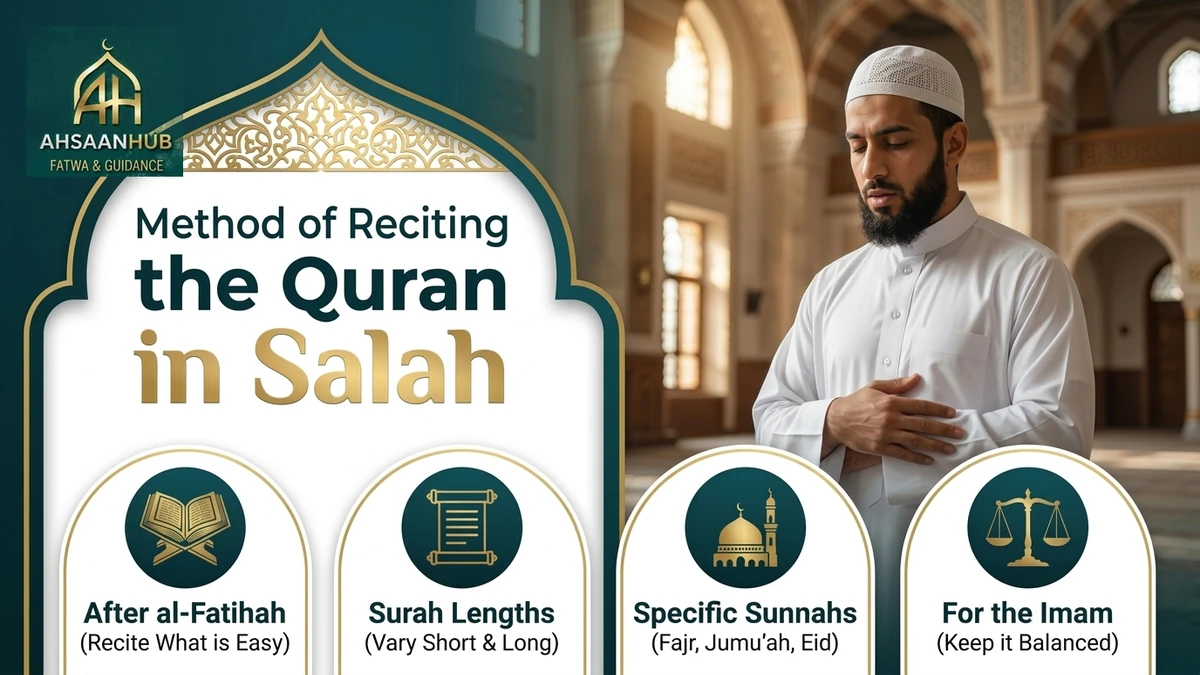
After Surah al-Fatihah has been recited in Salah, a person may recite from anywhere in the Quran.
Abu Hurairah (RA) narrates in an agreed-upon report that the Messenger of Allah (PBUH) said:
“ثُمَّ اقْرَأْ بِمَا تَيَسَّرَ مَعَكَ مِنَ الْقُرْآنِ”
Thumma iqra’ bima tayassara ma’aka minal-Quran.
Then recite whatever is easy for you from the Quran.
(Sahih al-Bukhari: 757, Sahih Muslim: 397a)
A person should try to recite whatever suitable portion of the Quran they can.
Fixing a rule that one must recite one long verse or three short verses is difficult to uphold.
No such specification has been narrated from the Prophet (PBUH). Whatever can be recited with ease after Surah al-Fatihah should be recited.
A person may choose from the shorter Surahs or from the longer ones.
Is It Sunnah to Always Recite Only Short Surahs?
One thing to understand here is that a habit has developed among many of us to always recite very briefly.
It should be remembered that the Prophet (PBUH) recited both short and long portions in the obligatory prayers at different times.
Did the Prophet (PBUH) Recite Long Surahs in Maghrib?
Aisha (RA) narrates:
“أَنَّ رَسُولَ اللَّهِ صَلَّى اللَّهُ عَلَيْهِ وَسَلَّمَ قَرَأَ فِي صَلَاةِ الْمَغْرِبِ بِسُورَةِ الْأَعْرَافِ فَرَّقَهَا فِي رَكْعَتَيْنِ”
Annar-Rasulallahi (PBUH) qara’a fi salatil-maghribi bisurat al-A’rafi farraqaha fi rak’atayn.
The Messenger of Allah (PBUH) recited Surah al-A’raf in the Maghrib prayer and divided
it across two Rak’ahs.
(Sunan al-Nasa’i: 991, Sahih al-Bukhari: 764)
Surah al-A’raf, which is counted among the longest Surahs, was also recited by the Prophet (PBUH) in the Maghrib prayer.
Which Surahs Did the Prophet Recite in Different Prayers?
A person may recite from anywhere in the Quran after Surah al-Fatihah.
However, there are certain prayers in which the Prophet (PBUH) would generally and most frequently recite specific Surahs:
- Regular Fajr prayer: In the Fajr prayer, where the recitation is generally long,
it is also established that the Prophet (PBUH) sometimes recited the
last two Surahs of the Quran, Surah al-Falaq and Surah al-Nas.
(Sunan al-Nasa’i: 952, Sunan Abi Dawud: 1462) - Fajr on Friday: On Fridays, the Prophet (PBUH) would recite Surah al-Sajdah
(Alif Lam Mim Tanzil) in the first Rak’ah and Surah al-Insan (Hal Ata ‘alal-Insani)
in the second Rak’ah during the Fajr prayer.
(Sahih al-Bukhari: 891, Sahih Muslim: 880a) - Jumu’ah and Eid prayers: In the Jumu’ah prayer and the Eid prayers, the Prophet (PBUH) would recite Surah al-A’la (Sabbihisma Rabbikal-A’la) in the first Rak’ah and
Surah al-Ghashiyah (Hal Ataka Hadithul-Ghashiyah) in the second Rak’ah.
(Sahih Muslim: 878a) - Sunnah prayers of Fajr and Maghrib: In the two Sunnah Rak’ahs before Fajr and the two Sunnah Rak’ahs after Maghrib, the Prophet (PBUH) would recite Surah al-Kafirun (Qul Ya Ayyuhal-Kafirun) in the first Rak’ah and Surah al-Ikhlas (Qul Huwa Allahu Ahad)
in the second Rak’ah.
(Sahih Muslim: 726, Jami’ al-Tirmidhi: 431)
How Long Should the Imam’s Recitation Be?
The fundamental point is that if a person has time, they should try to pray as long a
prayer as they are able to.
If they are leading as an Imam, they should recite an appropriate amount while keeping in mind the condition of those praying behind them.
The prayer should neither be rushed through in mere seconds or minutes, nor should it be made excessively long.
The Imam should adjust the recitation to suit the circumstances appropriately.