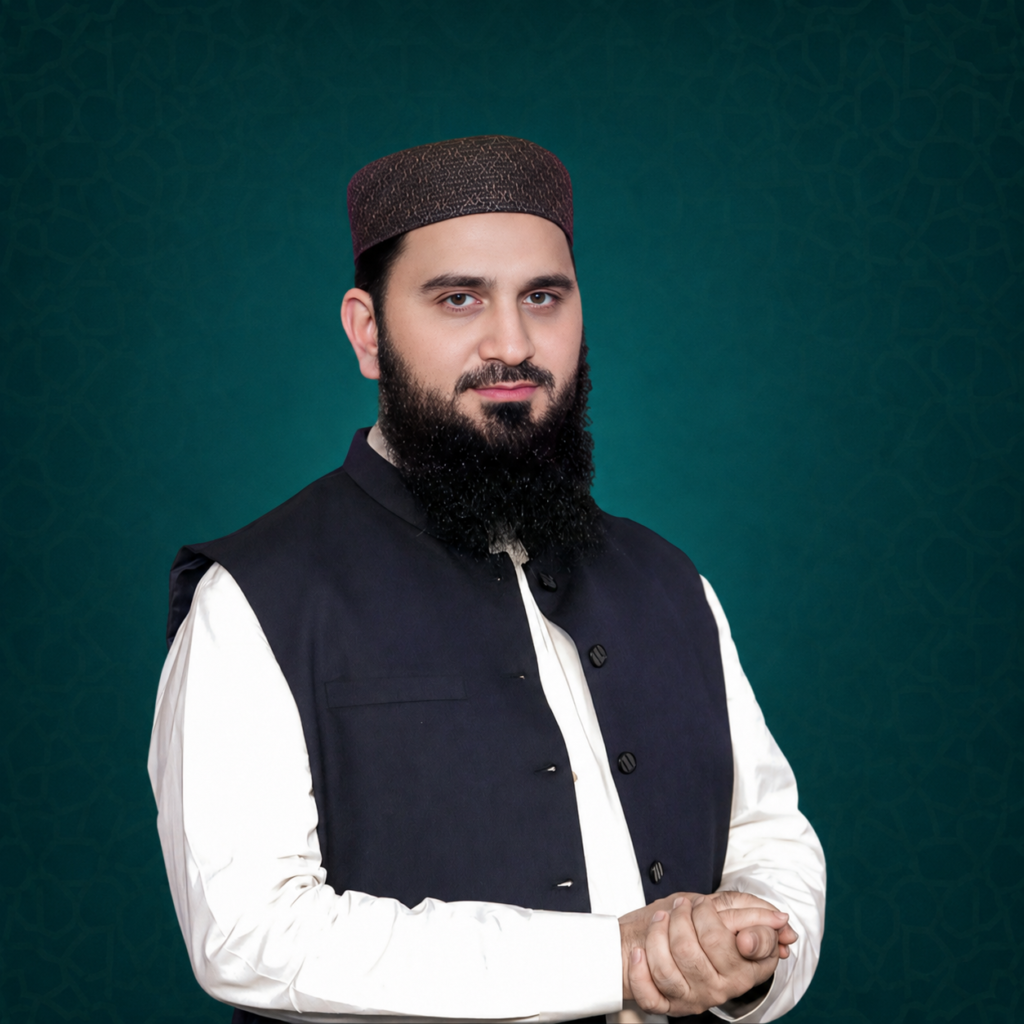
Scholar Profile
Dr Muhammad Rafiq
Islamic Scholar • Teacher • Researcher. CEO Alehsaan Organisation
Dr Muhammad Rafiq is a PhD Islamic scholar and a teacher who provides clear guidance on prayer (Namaz), Islamic beliefs, acts of worship, family matters, and contemporary issues. His explanations are based on the exegesis of the Quran (Tafseer), comprehensive Quranic study (Dawrah Quran), the interpretation of authentic Hadiths, and sound scholarly understanding, offering practical guidance for everyday Islamic life.
His areas of guidance specifically include prayers (Salah), Islamic doctrines, Quran and Hadith, acts of worship, family affairs, Arabic grammar, modern-day issues, Islamic education, and the practical religious questions Muslims face in their daily lives.
About Dr Muhammad Rafiq
Dr. Muhammad Rafiq, widely known to Muslims outside the country as Abu Saif, is an Islamic scholar, teacher, and researcher with a strong background in traditional Islamic studies, Quranic exegesis and Hadith studies, and international Islamic education. His academic journey combines classical Islamic education with modern scholarly research, enabling him to explain Islamic guidance in a clear, practical, and accessible manner.
Sheikh Muhammad Rafiq was born in 1976 in Sahiwal, Pakistan, to his father, Muhammad Yousuf. He spent about 15 years of his childhood in Saudi Arabia. His father worked in a library for Imam Abdullah Ibn Sabil in Mecca, a very important place for Muslims. He lived very close to the Imam’s house. Coincidentally, there was no one else who spoke Urdu there, except for two or three people in the house.
This is where Sheikh Rafiq learned to speak Arabic. Because everyone around him spoke Arabic, he became very proficient in speaking it. After returning to Pakistan, he continued his formal Islamic education, completing the Dars Nizami curriculum.
He gained expertise in Islamic scholarship and later completed higher academic studies in Hadith. For many years, he taught at prestigious Islamic institutions and lectured internationally, and served Muslim communities through both traditional teaching and modern media platforms.
Early Life and Education
Dr Rafiq spent his childhood in the Saudi Arabian city of Mecca. During these early years, he was raised close to the environment of the Haram, which instilled in him a natural affinity for the Arabic language, Quranic teachings, and Islamic sciences.
He received his early education from the Uthman bin Affan School in the Shisha/Azizia area near Mina and memorized 10 chapters of the Quran during his stay in Mecca.
After returning to Pakistan in 1989–1990, he continued his formal religious education and later studied traditional Islamic sciences, including Arabic grammar (Sarf and Nahw), Islamic studies, and higher religious books, which later became the foundation of his academic journey.
He studied from matriculation to PhD. His PhD is on the topic of Hadith research from the University of Lahore.
islamic Studies & Qualifications
Since he came from a religious family background and his father was also religious, upon coming to Pakistan, the first thing said was that his religious education should be completed in one way or another. In the beginning, he got the opportunity to study with the Deobandis.
He studied full Persian with them for one year. Since his father belonged to Jamaat Ahl-e-Hadith, initially he studied at Jamia Aziziyah Sahiwal during the days of Baba Ji.
In 1993, he then came to Satyana Bangla to Maulana Atiqullah Sahib. The first class of the book department was running there. They directly said that he knows Arabic, so his first two years were skipped, and he was seated in the third year.
He knew Arabic, but he did not know Arabic grammar.When Abu Noman Bashir Sahib started teaching ‘Hidayat-un-Nahw’, he had the urge to ask what ‘Haal’ means and what ‘Mansub’ means. The boys started looking at him, thinking that he had come and sat in the third class and he did not even know this. Then, in one week, he memorised the entire Urdu ‘Ilm-un-Nahw’ by heart and memorised the text of the Arabic ‘Hidayat-un-Nahw’.
There, he studied under great teachers like Sheikh Abdullah Amjad Chhatwi, Abdul Ghaffar Awan, and Abdul Kareem Sahib. Then, he went to Jamia Salafia Faisalabad. In 1996, when Hafiz Sharif Sahib started ‘Markaz-ut-Tarbiyyah’, he was his first student. He studied there for four years.
Whatever he has learned in life, the credit for it goes to his teacher Hafiz Sharif Sahib, and he learned a gentle temperament from Hafiz Masood Alam Sahib.
Teachers & Scholarly Training
A major part of Dr Muhammad Rafiq’s scholarly development came through his teachers and the institutions where he studied. His learning was shaped by respected teachers. These teachers influenced different aspects of his scholarly personality, including depth of study, clarity in explanation, gentleness in teaching, and analytical understanding of Islamic knowledge.
His training later became an important part of his own teaching style, especially in explaining Arabic grammar, Hadith, and Islamic guidance to students in a structured and practical way.
Dr Muhammad Rafiq has served as a teacher and educator in several respected Islamic institutions. His teaching career includes work with advanced students of Islamic sciences, especially in areas related to Arabic grammar, Hadith, Fiqh, and structured religious education.
He taught at institutions such as Markaz al-Tarbiya al-Islamiyya in Faisalabad, Jamia Salafia Faisalabad, Quran College Phool Nagar & Jamia Salafia Islamabad. In addition to teaching, he also served in academic and administrative roles, helping students develop a stronger understanding of Islamic knowledge through organised study and practical explanation.
His years of teaching have allowed him to work with students from different backgrounds, both in Pakistan and abroad. This experience helped shape his method of explaining complex Islamic subjects in a clear, step-by-step, and accessible manner.
Teaching Services & Online Education
Teaching services and online dawah journey: After graduating in 2000, Hafiz Muhammad Sharif Sahib hired him as a teacher there. He was assigned Arabic language and Arabic grammar.
After teaching there for two years, in 2002, he taught at Jamia Salafia Faisalabad and conducted classes on understanding the Quran. During this time, he also printed a grammar booklet called Tahsil Al-Nahw for the general public.
Later, he went to Islamabad and became the Principal of Jamia Salafia Islamabad. He was attached to computers since 2000. When the people of Madinah University conducted a 21-day online Arabic course on Paltalk, he participated in it.
After the course was over, he asked his teachers, Dr. Asim Qaradawi and Dr. Tahir, what would be the benefit if he conducted the same course in Urdu? They said that those who joined him would be sent certificates from the University of Medina.
He created a free website and put the details on it, and prominent figures from major institutions in America and Europe (Al-Huda, Noor-ul-Quran, Ar-Rahma Institute, ISNA) joined it. This created strong relationships with these institutions and started a long series of classes on the principles of Hadith.
In 2012, he moved to Dubai and stayed there until 2018, initially working as an Arabic translator for a private chartered airline, then getting involved in business. Throughout his time in Dubai, he did not stop teaching. He was hired as a ‘Badil’ (replacement preacher) by Ajman Auqaf and he used to deliver sermons every Friday; those spontaneous conversations were highly appreciated.
In Pakistan, he has done a lot of public welfare work in his locality of Tandlianwala. A hospital has been built with all kinds of facilities, patients are treated and operated on free of cost, and water filters have been installed in various places.
Al Ehsaan TV and Media Vision
After returning to Pakistan, Dr Muhammad Rafiq continued his educational and dawah work through modern media platforms. He launched Al Ehsaan TV with the aim of spreading verified Islamic knowledge to audiences who may not always have access to reliable online resources.
One of the important goals behind this media work is to reach people in areas where internet access is limited and satellite television remains an important source of learning. Through this platform, Islamic lectures, Quran lessons, scholarly discussions, and educational programs can reach wider communities in a consistent and accessible way.
Dr Muhammad Rafiq has also emphasized the importance of preserving the knowledge of senior scholars through high-quality audio and video recordings. His media vision is not only to deliver current religious guidance, but also to archive scholarly knowledge for future generations.
The channel is broadcast in almost 82 countries all over the world. Asia: Pakistan, India, Bangladesh, Sri Lanka, Afghanistan, Iran… Middle East: Saudi Arabia, UAE, Oman, Bahrain, Qatar, Kuwait, Egypt, Iraq. Africa: Sudan, Ethiopia, Kenya, Tanzania, South Africa… Europe: Germany, France, Italy, Spain, UK.
Select PAKSAT on your receiver and select downlink Freq as 3846. Symbol Rate is 6599 and polarity is Vertical. Watch this channel on the same frequency that is broadcasting PTV Sports. All the receivers that are broadcasting the transmission of Geo, Dunya News, and PTV Sports are broadcasting Al Ehsaan TV channel.
On IPTV: Al Ehsaan TV continues to strengthen its global presence by extending its broadcast beyond traditional satellite and digital platforms. To provide a seamless viewing experience for audiences in the United States and Canada, the channel is now available on leading smart TVs, including IPTV, Roku Box, and Amazon Fire Stick.
Areas of Guidance
- Quran Tafsir & Hadith Tafseer
- Prayer & Worship
- Family Matters
- Arabic Grammar
- Hadith Studies
- Contemporary Issues
- Islamic Online Education
Latest Answers by Dr Muhammad Rafiq
How Many Rakats Are in 5 Daily Prayers?
4–6 minutes How many Rak’ats are there in each prayer? Among the important rulings of Salah, one must also know the prescribed number of Rak’ahs. It should be understood that when we speak of the number of Rak’ahs in prayer, what is fundamentally meant by “Salah” is the obligatory (Fard) prayers. How Many Fard Rak’ahs…
What are the Authentic Adhkar to Say after Salah?
Sunnah adhkar to recite after a salah prayer When a person completes their prayer by the grace of Allah and gives the Salam, there are prescribed Sunnah remembrances (Adhkar) that should be recited thoroughly. There is a vast difference between supplications composed by oneself and those taught by the Prophet (PBUH). The supplications taught by…
How to Perform the Final Tashahhud and Salam in Salah?
How Is the Final Tashahhud Different From the First? The final Tashahhud differs from the first Tashahhud in the manner of sitting. Abu Humayd al-Sa’idi (RA) narrates that when the Prophet (PBUH) sat in the final Rak’ah, he would bring his left foot forward, keep his right foot upright, and sit directly upon the ground.…
How to Perform Tashahhud and Point the Finger in Salah?
How Should the Second Rak’ah Be Performed? When one Rak’ah is completed and a person stands for the second, the opening supplication (Du’a al-Istiftah) does not need to be repeated. One simply begins with Bismillah, recites Surah al-Fatihah in full, adds another Surah, and then goes into Ruku by saying Allahu Akbar and performing Rafa…
How to Sit Between Two Sujood and Stand for the Next Rak’ah?
What Are the Sunnah Ways to Sit Between Two Prostrations? After rising from the first Sajdah, two methods of sitting between the two prostrations are established from the Prophet (PBUH): The first method: Abu Humayd al-Sa’idi (RA), while describing the prayer of the Prophet (PBUH), narrates that when the Prophet (PBUH) rose from Sajdah and…