What Are the Sunnah Ways to Sit Between Two Prostrations?
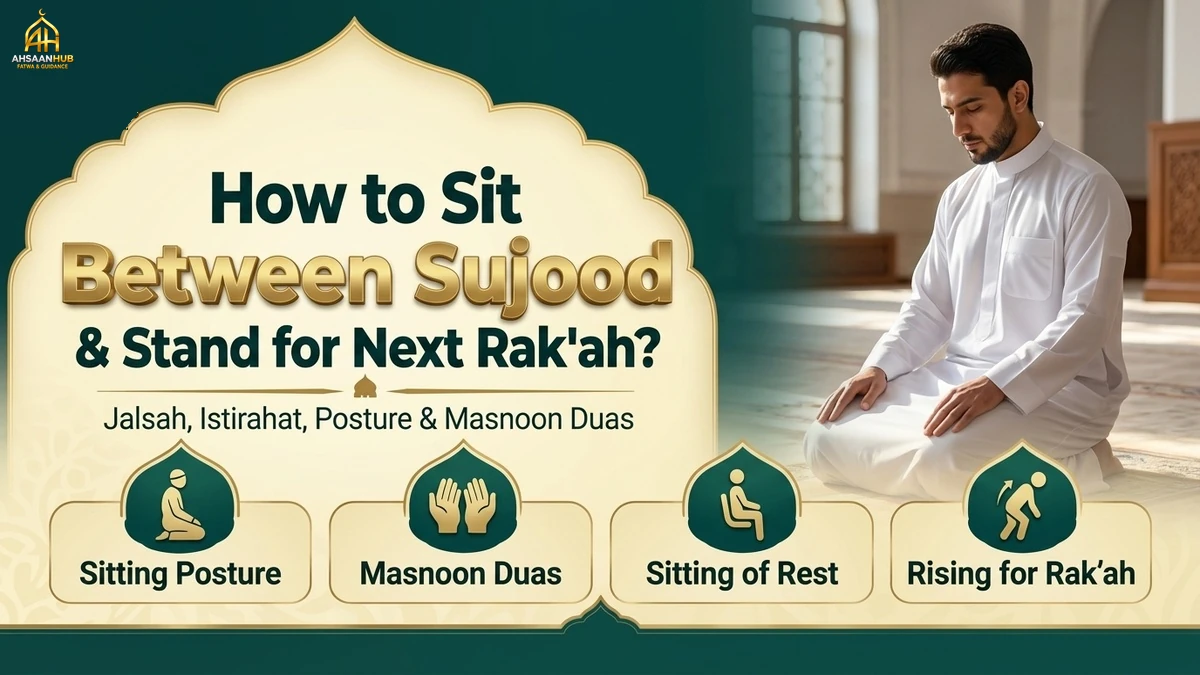
After rising from the first Sajdah, two methods of sitting between the two prostrations are established from the Prophet (PBUH):
The first method: Abu Humayd al-Sa’idi (RA), while describing the prayer of the Prophet (PBUH), narrates that when the Prophet (PBUH) rose from Sajdah and sat, he would spread his left foot beneath him and sit upon it, while keeping his right foot upright.
He would settle with such composure that every joint rested in its proper position.
He did not proceed to the second prostration before settling properly into the sitting posture.
(Sunan Abi Dawud: 730, Sahih al-Bukhari: 828)
The second method: Abdullah ibn Umar (RA) narrates that when the Prophet (PBUH) rose from the first prostration, he would sit upon the balls of his toes, keeping both feet upright beneath him. He stated that this was the Sunnah practice of the Prophet (PBUH).
(Sahih Muslim: 536, Sunan Abi Dawud: 845)
Therefore, one may sit between the two prostrations in the same manner as during Tashahhud (left foot spread beneath, right foot upright), or one may sit upon both feet with the toes pressed against the ground. Both methods are authentically established.
Where Should the Hands Be Placed Between Two Prostrations?
While sitting between the two prostrations, the worshipper should place both hands on the thighs or on the knees, in the same way as one sits during Tashahhud.
One important point to remember: The finger is not raised to point during the sitting between two prostrations.
The hands are simply placed flat and straight.
What is the dua to read between two sajdahs?
The most frequently established supplication from the Prophet (PBUH) in authentic Hadiths for this sitting is:
First Dua Between Two Sajdahs:
“رَبِّ اغْفِرْ لِي، رَبِّ اغْفِرْ لِي”
Rabbighfir li, Rabbighfir li.
My Lord, forgive me. My Lord, forgive me.
(Sunan Abi Dawud: 874, Sunan Ibn Majah: 897)
Second Dua Between Two Sajdahs:
اللَّهُمَّ اغْفِرْ لِي، وَارْحَمْنِي، وَعَافِنِي، وَاهْدِنِي، وَارْزُقْنِي
Allahummaghfir li, warhamni, wa ‘afini, wahdini, warzuqni.
O Allah, forgive me, have mercy on me, grant me well-being, guide me, and provide for me.
(Sunan Abi Dawud: 850, Jami’ at-Tirmidhi: 284)
This First supplication should be repeated continuously. There is no fixed number for its recitation.
A person should keep reciting it long enough so that the duration of this sitting is approximately equal to the duration of the first Sajdah.
Although other supplications have also been reported, this is the most frequently
established one.
The Ruku, the Qoumah after Ruku, the first Sajdah, the sitting between
two prostrations, and the second Sajdah were all approximately equal in duration
in the prayer of the Prophet (PBUH).
(Sahih al-Bukhari: 792, Sahih Muslim: 471)
How Should the Second Sajdah Be Performed?
After reciting this supplication, the person says “Allahu Akbar” and descends into the second prostration. The second Sajdah must be performed with the same complete composure and tranquility as the first.
All seven limbs must be placed firmly on the ground to complete this second prostration, and the same supplications and adhkar that were recited in the first Sajdah should be recited in the second Sajdah as well.
What Is Jalsat al-Istirahat and When Should It Be Performed?
After completing the second Sajdah, when it is time to stand for the next Rak’ah, the established practice of the Prophet (PBUH) is that he did not stand up immediately from the second prostration.
Rather, he first sat upright with composure and then rose for the next Rak’ah.
This brief sitting is known as Jalsat al-Istirahat (the sitting of rest).
Malik ibn al-Huwayrith (RA) narrates that when the Prophet (PBUH) rose from the second Sajdah to stand for the second Rak’ah, or after completing the third Rak’ah to stand for the fourth, he would first sit properly and then stand.
(Sahih al-Bukhari: 823)
The method is as follows: when rising from Sajdah, one says “Allahu Akbar,” sits upright briefly, and then stands for the next Rak’ah.
How Should You Stand Up for the Next Rak’ah?
After Jalsat al-Istirahat, when rising for the next Rak’ah, one stands up directly without saying Takbeer (Allahu Akbar).
The Sunnah practice narrated in the Hadiths is that the Prophet (PBUH) would clench his fists and press them against the ground, using them as support to push himself up to the standing position.
Whoever wishes to follow the method of the Prophet (PBUH) should do likewise.
An important distinction to remember regarding the order of descending into and rising
from Sajdah:
- When going down into Sajdah: The hands are placed on the ground first, followed by the knees.
- When rising from Sajdah to stand for the next Rak’ah: The knees are lifted as one rises, while supporting oneself with the hands upon the ground.
(Sahih al-Bukhari: 824)
These are the authentic methods and rulings established from the Sunnah of the Prophet (PBUH).